
Choosing Waxflower for Landscape Design: What Really Matters
PODCAST
Not all waxflowers are created equal. While cut flower growers favour long stems and vigorous growth, landscape professionals often need something quite different. Helix Australia's Adrian Parsons shares what to look for when selecting waxflowers for borders, low hedges, pots and other landscape applications.
Landscaping Victoria | 12 November 2026 | 3 min read
When it comes to choosing plants for a landscape project, what looks good in a nursery pot doesn't always tell the full story.
Take waxflower, for example. A variety bred to produce long, abundant stems for the cut flower market might be a commercial winner, but that same vigorous growth isn't necessarily what you want lining a garden path or filling a decorative pot.
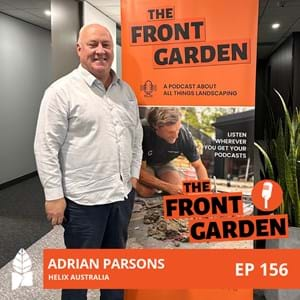
In episode 156 of The Front Garden, host Adam Hompas sits down with Helix Australia co-founder Adrian Parsons to explore how different waxflower varieties are developed for different purposes, and what landscape professionals should consider before making their selections.
Why growth habit matters more than you might think
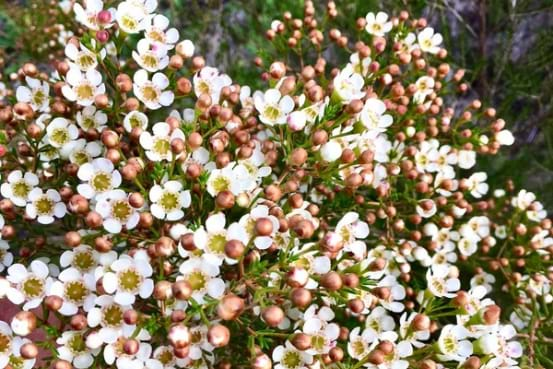
For landscape applications, the right waxflower is often the one that holds its shape.
While cut flower growers typically want strong, vigorous plants that produce plenty of long stems, landscape designers are often looking for more compact varieties that fit comfortably into a planting scheme without demanding constant attention.
Helix Australia's landscape selections include varieties growing to around 50–70 centimetres, with some staying even lower.
That makes them worth considering for low hedges, garden borders, edging and container planting, particularly where space is limited or a neat, consistent appearance is part of the design.
The key is to look beyond the plant's appearance at the nursery and understand its natural growth habit.
How tall will it grow?
Will it maintain a compact shape?
And how much intervention will it need to keep looking its best?
These are the questions worth asking before the plants arrive on site.
The maintenance question: what happens after handover?
A planting design might look spectacular on completion, but its long-term success often comes down to how well the plants suit the maintenance regime.
Adrian points out that some older waxflower varieties have a tendency to become leggy and woody if they're not pruned regularly. Hard annual pruning can help maintain a dense, bushy appearance, but that level of attention won't suit every garden or client.
Naturally compact varieties can offer a more practical alternative where ongoing maintenance is limited.
For designers, installers and maintenance teams, it's a useful reminder that plant selection isn't just about achieving the desired look on day one. It's about making sure that look can be sustained well into the future.
Don't forget the flowering calendar!
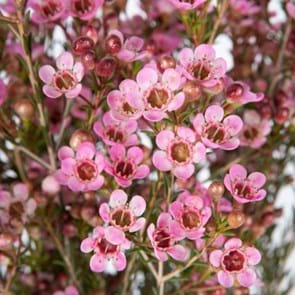
Growth habit isn't the only consideration. Flowering time also plays an important role in choosing the right waxflower.
Helix Australia evaluates new varieties for early, mid-season and late flowering. For commercial cut flower growers, this helps extend the period in which flowers can be supplied to market.
For landscape professionals, it presents a different opportunity: choosing varieties that contribute colour and seasonal interest at the right time.
Whether you're planning a garden around a particular flowering period or looking to complement other plants in a broader planting scheme, understanding when a waxflower is likely to bloom can help inform a more considered design.
From breeding trial to garden bed
There's also a fascinating story behind how new waxflower varieties make their way into the nursery trade.
Through its partnership with Kings Park in Perth, Helix Australia trials new hybrids and evaluates their potential for both the cut flower industry and landscape applications.
Promising selections are then brought to market through licensed growers, with plant royalties accounted for through the labels used in the Australian nursery trade.
It's a process that highlights just how much work can sit behind a seemingly simple plant choice.
And for landscape professionals, it reinforces the value of asking the right questions when sourcing stock.
Before specifying a waxflower, consider:
- Mature size: Will the plant fit the space once fully grown?
- Natural growth habit: Is it compact and bushy, or more vigorous and upright?
- Flowering period: When will it contribute the most to the garden?
- Pruning requirements: Can the expected maintenance regime support the variety's needs?
A little extra knowledge at the selection stage can make a meaningful difference to the finished landscape.
Listen to The Front Garden podcast – Episode 156
From the qualities that make a waxflower suitable for landscaping to the breeding programs bringing new varieties to Australian nurseries, Adrian Parsons offers an interesting behind-the-scenes perspective on a familiar garden plant.
Listen to episode 156 of The Front Garden Podcast, where Adam Hompas and Adrian explore the science, selection and commercial thinking behind the waxflowers we see in our gardens.
Listen to The Front Garden EP155: What Open Gardens Can Teach Landscape Professionals
Follow The Front Garden wherever you listen to podcasts so you don’t miss future episodes.
Landscaping Victoria proudly presents The Front Garden podcast, brought to you by ShapeScaper.
SHAPESCAPER® Steel Landscape Planters and Garden Edging are a modular steel landscaping system that will make working on your next project a pleasure, turning your great ideas into reality! Select from a large range of stylish “rusted” REDCOR® weathering steel planters and landscape edging suitable for both domestic and commercial landscape installations. Easily replace failing wooden or plastic in your garden with long-lasting metal, fully recyclable and Australian-made.


